
Atlanta Storm Damage Restoration: Matched With Verified Contractors
When a storm opens the roof or breaks a window, water comes straight in. So storm damage is roofing work and interior water restoration happening at the same time. Korean Home Service sorts out both sides, matches you free with vetted contractors, and walks you through the insurance claim in Korean.
In short: Storm damage restoration runs in order: tarp the opening so no more water gets in, extract and dry what already did, then repair the roof and the interior. Korean Home Service matches you with vetted contractors for free and explains the documents in Korean.

At a Glance (TL;DR)
- Order: emergency tarping, then extraction and drying, then roof and interior repair
- A tarp is an emergency measure. It is not the repair
- Photograph the damage before you touch anything, in a way that records the date
- Verify anyone knocking on your door after a storm before you sign
- Free matching with license and insurance verified contractors. Paperwork in Korean
Korean Home Service Is Here to Help
We simplify the repair and improvement process for Korean homeowners. We give you cost guides, calculators, and project tips, then match you with qualified contractors to do the actual work.
What Follows Storm Damage
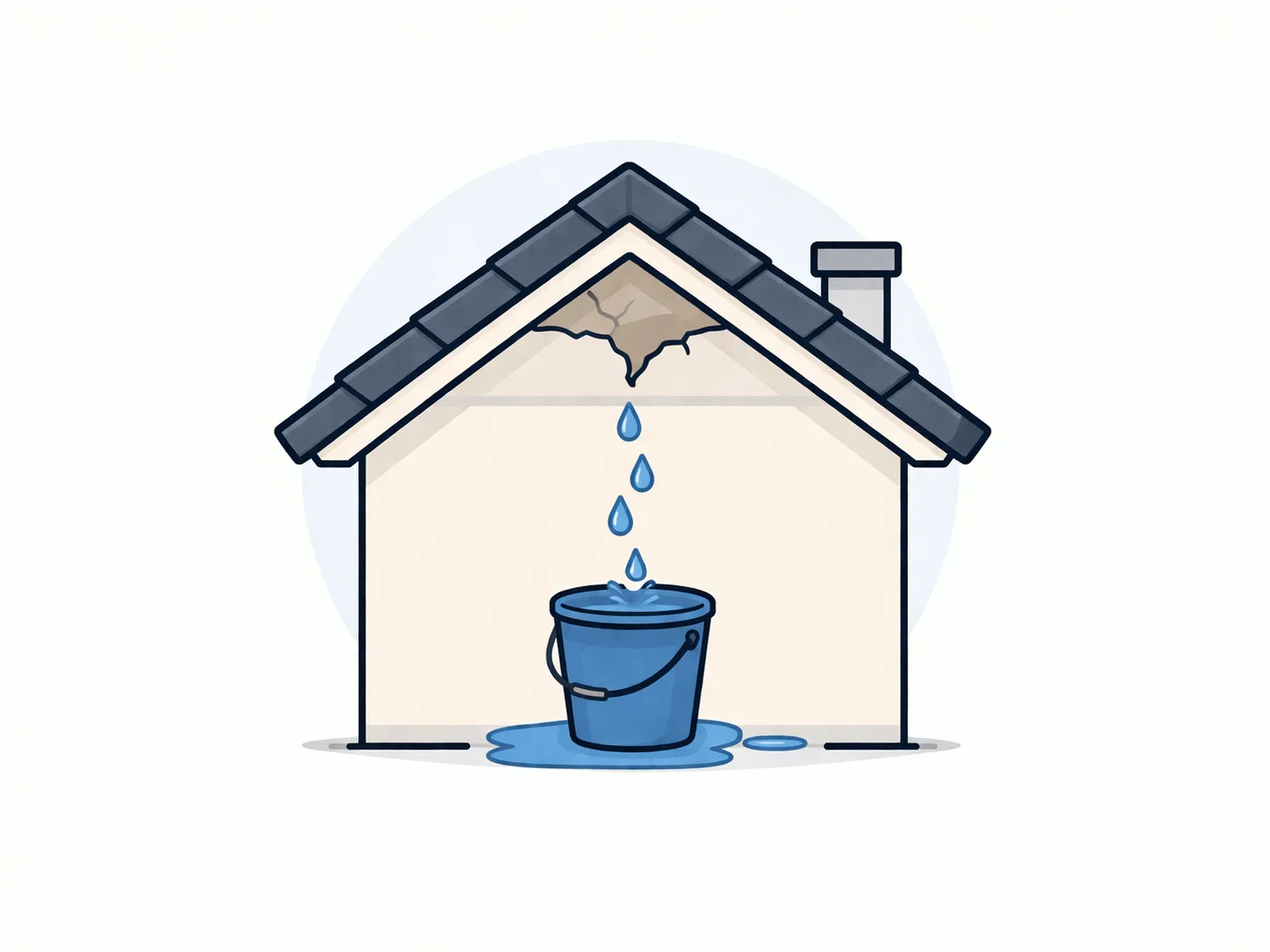
Emergency Tarping
A waterproof tarp goes over the opened roof and broken windows get boarded. Getting this done before the next rain is the whole point.

Interior Water Extraction
The water already inside comes out and wet material gets cleared. Fix only the roof and the interior turns into mold.

Drying
Attic insulation and wall cavities get dried too. Water from the roof has usually spread downward from above.

Roof Repair
The tarp comes off and it moves to actual repair or replacement. We connect you to KHS roofing contractors.

Interior Rebuild
Ceilings and walls removed because they were wet get put back. This is the part that lands as the second invoice.
Documentation
Damage photos, the date of the emergency measures, the contractor’s report. We organize the claim paperwork in Korean.
From Request to Rebuild, All in Korean

Request a Free Quote (2 Minutes)
Just tell us where the water came from and how far it has spread. A few photos are enough. We match you, free, with a vetted restoration contractor.

Damage Scope Confirmed
The contractor uses moisture meters to find water you cannot see. Inside walls, behind baseboards, under the floor. Nothing gets quoted until the wet area is mapped.

Extraction, Drying, Documentation
Water comes out, equipment goes in. The daily moisture log they keep is the same document your insurance claim runs on. We walk you through it in Korean.

Compare the Rebuild Quote
Once it is dry, putting back what was cut out is a separate job. That is the second invoice. We confirm the total in Korean before you sign.
What Drives the Cost of Storm Restoration
Because the roof and the interior are both in play, the line items run in two tracks:
- Size of the opening and the tarping scope
- How long water was coming in and how many floors it reached
- Volume of wet material (ceilings, insulation, walls)
- Roof repair or full replacement
- Interior rebuild scope (paint, ceilings, flooring)
Storm damage arrives as a wave of simultaneous requests, so contractor schedules back up. Getting the tarping booked first and waiting on the main work is often the realistic path.
Can You Get Your Home Restored If You Do Not Speak English?
Yes. Our restoration partners do not have Korean-speaking crews. That is exactly why this part is our job. We translate the quotes and work reports the contractor sends, line by line, into Korean. We explain what your insurance paperwork actually says. And we tell you the total before any money moves. You will never sign a document you cannot read.
Frequently Asked Questions
Damage from a sudden external force like wind or hail is generally within homeowners insurance. Flooding that came across the ground is usually separate flood insurance, and anything judged as wear or a maintenance issue is excluded. Check your own policy for exact coverage.
Emergency measures taken to prevent further damage are often accepted as a claim item. Keep the receipt and before-and-after photos. Conversely, damage that grew because no emergency measure was taken at all can be hard to recover.
Storms bring in crews from outside the area. Do not sign anything on the spot. Ask for the state license number, the insurance certificate, a local business address, and recent customer references, and decide after you have verified them. Be especially careful with anyone offering to do it for whatever insurance pays or to cover your deductible.
No. Water in the attic insulation and the wall cavities does not dry on its own, and closing up the roof actually cuts the airflow and slows it further. Interior drying has to be scoped as its own job.
Safety first. If there are power lines tangled in it, do not touch it, call the utility. Tree removal, roof repair, and interior water restoration are three different contractor scopes, so sequencing matters. We sort out the order for you.
Yes, 100% free. There is no cost to be matched and no cost for a quote. The contractor who wins the job pays our fee.
Yes. That is most of what we do. We walk you through the contractor’s paperwork and the estimate your carrier sends, in Korean. We are not an insurance agent and we cannot promise your claim gets paid. Our job ends at making sure you understand it before you decide.
Not yet. Our restoration partners do not have Korean-speaking crews. So Korean Home Service handles the Korean. We translate the documents, and if you want, we join the on-site walkthrough with you.
